How to read today's fantasy match prediction: a practical, evidence-based guide
The single most important question for a daily-play user is not "who wins?" but "which read of the match holds up after lock-in?" Here is the framework the desk applies before each slate, written so a first-time daily-play user can run it on the next contest without insider vocabulary.
Pick any slate and the same five signals compete for attention: form, fixture, venue, toss, captain-pick math. They are not equal. Some of them shift expected fantasy points by a few percent. One of them, on certain nights, shifts the whole slate. The job of a prediction is to weight them in the right order, and the job of reading a prediction is to know which signal did the heaviest lifting and what the trade-off cost.
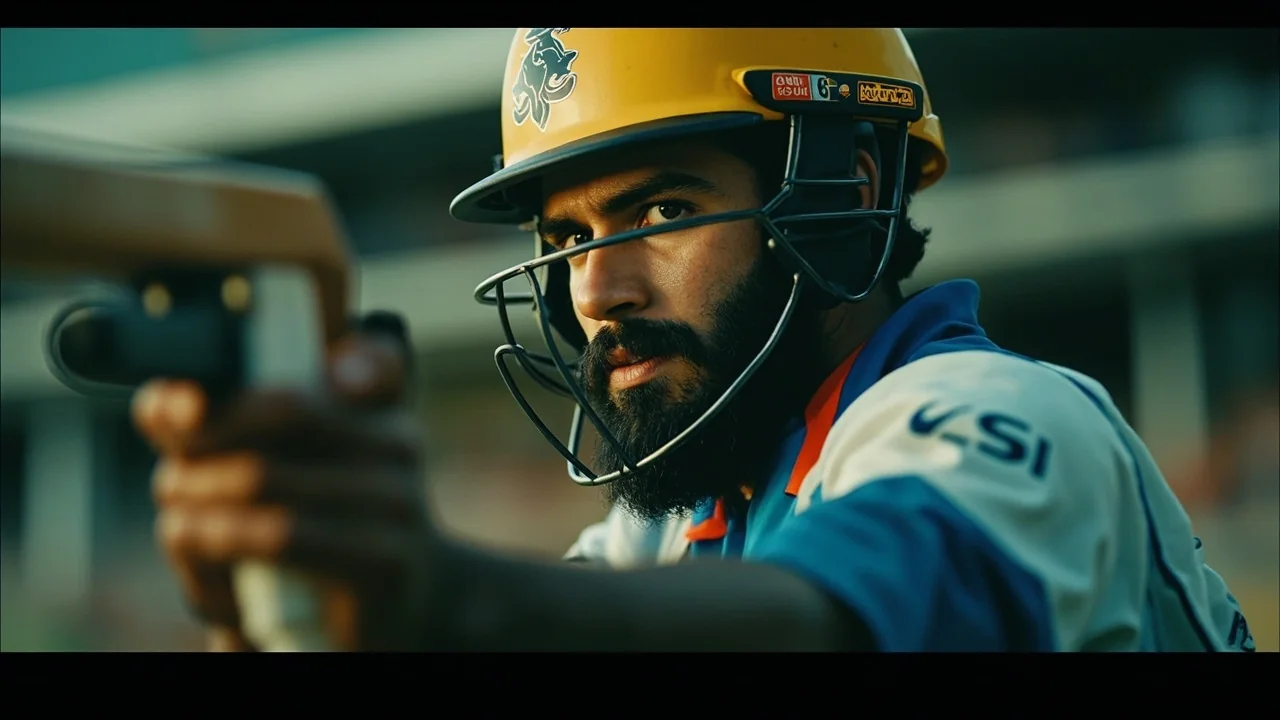
What follows is a practical guide to that read. It does not promise a winning pick on every slate — no method does. It promises something narrower and more useful: a way to look at tomorrow's prediction, identify the signal the editor trusted most, and decide whether your own captain pick should follow it or push back against it.
Why the four-signal frame is the right starting point
A fantasy prediction is a forecast of a future points total, not a forecast of the match result. That distinction is the trigger for the entire framework. A team can lose a match and still post above-average fantasy points if the captain fires and the death bowlers take wickets. A team can win a match and post a below-average fantasy total if the batters fall early and the bowlers go at ten an over. Reading a prediction as a match-result forecast is the most common mistake, and it produces the most common failure pattern: picking captain from the team you think wins.
Predictions built around the four-signal frame — form, fixture, venue, toss — work because each signal maps to a points source, not just a win probability. Form drives batting and bowling points per innings. Fixture drives the matchup component (a top-order batter against a weak pace attack scores more). Venue drives expected scoring rate and the pace-versus-spin balance. Toss drives the second-innings chase, which under dew rules tends to inflate points for the chasing top order. Together they cover the four largest points sources on a typical T20 slate, and a prediction that names which signal it weights first is more useful than one that lists them in order without ranking.

The first read on any prediction is therefore: which signal did the editor weight first, and is that the right one to weight first for this match? Most slates have one signal that dominates. A dew-heavy evening game with a used surface is a toss-and-venue slate, not a form slate. A day game on a flat track with a settled batting order is a form-and-fixture slate. If the prediction does not name the dominant signal, the user has to do the ranking themselves, and the read gets noisier with every step.
How the four signals connect to a captain pick
The chain from signal to captain pick runs in five steps. None of the steps is novel; the value is in running them in order rather than picking a captain and reverse-fitting the signals to the pick.
- Read the form ledger. The last-five-match average for the players in the XI. Not the season average — the recency average. A player on a 30-run last-five average is a different captain pick than a player on a 60-run season average that includes one outlier hundred.
- Layer the fixture. Opposition rank in the relevant phase. A top-order batter against the worst pace attack on the slate is a stronger captain case than the same batter against the best. A spinner against a left-handed cluster is a stronger case than the same spinner against a right-handed cluster.
- Apply the venue lens. Pitch type, boundary size, expected total. Chinnaswamy in April is a different venue from Chepauk in December, and the same prediction does not transfer cleanly between them.
- Wait for toss. Toss impact is conditional. On a flat afternoon match the toss is mostly noise. On a slow pitch with dew it can flip the captain pick by a tier toward the chasing top order.
- Lock the captain. The captain pick is the player whose expected-points line clears the field by the largest margin after all four lenses. The margin does not have to be huge — two or three points per innings over the next-best option is enough across an 11-player squad to win a narrow field.
The chain works because each step narrows the candidate set. By the time toss lands, the user is choosing between two or three names, not the full XI. That narrower choice is also where the prediction is most testable: if the editor's captain pick is a name the user has not arrived at after running the chain, the user has a real reason to push back.
Where the framework breaks, and what the limits look like
Every prediction framework has a failure mode, and the four-signal frame is no exception. The honest read of the method has to name the limits before claiming the upside. The most common limits fall into three groups.

Injuries and last-minute changes. The form ledger is built on the XI that takes the field, not the XI that was named at the toss. A late swap for an impact-player rule replacement, a niggle that surfaces during warm-up, or a player rested for workload reasons can invalidate the form signal in a single news cycle. A user who locks captain thirty minutes before toss and then does not re-check the playing XI has accepted a known form risk.
Pitch reads that move late. A pitch can be reported as a belter in the morning and play as a slow turner by the second innings. The venue lens is the noisiest of the four signals in matches where the surface has not been used before, and the prediction is only as strong as the pitch read it is built on. This is one of the cleanest cases for treating the prediction as a starting point, not a verdict.
Captain-pick variance. Captaincy multipliers amplify both the upside and the variance. A captain who fires returns 2x; a captain who fails returns 2x of a smaller number. Across a season of 300-plus daily-play contests, the captain-pick variance dominates the four-signal frame in absolute points, which is why the framework includes a volume clause: small daily decisions compounded across a season, not a single marquee match.
The practical implication of these limits is a three-rule read on any prediction. First, run the chain and arrive at your own captain pick before you read the editor's pick. Second, when the two picks agree, you have a higher-confidence read; when they disagree, the disagreement is a signal worth a second look rather than a reason to defer. Third, treat the prediction as a probability overlay, not a certainty claim — the framework aims to win more often than the field, not to win every contest.
A seven-step pre-lock-in read for the next slate
For users who want a concrete run-through before tomorrow's lock-in, the desk applies a seven-step checklist. Each step is short enough to run in under three minutes; the full checklist is the practical hand-rail the match prediction desk uses on every marquee slate.
- Open the predicted XI and the form ledger. Note the two players with the highest last-five-match average and the two with the lowest.
- Check the opposition rank. Cross-check the predicted XI's top-order batters against the opposition pace attack and the middle order against the spin attack.
- Read the venue note. Mark the venue as flat / slow / turning / two-paced / green before you read the editor's take.
- Wait for the toss. Re-rank the captain pick only if the toss flips the second-innings chase expectation.
- Lock captain. The pick should be the player whose expected-points line clears the field after all four lenses, not the player you most want to back.
- Lock vice-captain. The vice-captain is the hedge, not a second captain. Pick the next-most-aligned name, not a punt.
- Sanity-check the salary cap. If the captain pick forces a 2-credit drop elsewhere, the drop has to be on a role that contributes through the match, not on a role that only fires in the powerplay.
Run that list on the next three slates before deciding whether the framework fits the way you play. Some users find the four-signal frame too slow for the lowest-entry contests and prefer a single-signal read on form. The framework still gives them a vocabulary for the captain pick — it just compresses the chain to step one and locks the captain from the form ledger alone. The chain is a tool, not a rule.
Five reads that look like predictions but are not
A few patterns show up often enough to be worth naming. They are not predictions in the four-signal sense; they are reads that look like predictions and carry the same trust weight without the same evidence base.
- Stacking on the home team. Home advantage shifts the win probability by a small amount. It does not shift the captain-pick math by enough to override a stronger form or fixture case on the away side.
- Picking captain from the better top-order batter. Top-order batters depend on the powerplay. If the powerplay is a slow track against spin, the better top-order batter is not necessarily the higher-ceiling pick.
- Treating the season average as the form signal. A 50-run season average built on one outlier hundred and four low scores is a different captain case from a 40-run season average built on five consistent 35-45 innings.
- Reading toss as the dominant signal. Toss matters in two scenarios: evening matches with dew, and slow pitches with a used surface. On a flat afternoon match the toss is mostly noise.
- Locking captain before the playing XI is confirmed. The form ledger is built on the XI that takes the field. A last-minute change in the playing XI invalidates the form signal, and the captain pick has to be re-ranked or skipped.
Each of these is a fast read that feels like a prediction. The framework calls them out because each one is a known failure pattern in the captain-pick math, and the cost of the failure is paid on the slate, not in advance.
What the desk verifies, and what we leave labelled as uncertain
Methodology disclosure is part of the editorial standard on PlayerzPot, and the prediction framework is no exception. The four-signal frame is built on publicly reported match data, venue history, and the form ledger. The desk verifies form and fixture against the published playing XI. The desk does not verify the pitch read independently of the on-site report; the venue lens is treated as a high-confidence read on established grounds and a medium-confidence read on first-use surfaces.
The captain pick is the application of the framework to a specific match, and the desk treats it as a probability overlay, not a forecast. No claim in the limitations section below or on the broader match prediction desk should be read as a guarantee. Where the framework reaches its limits — late injury news, first-use pitch surfaces, captain-pick variance across a season — the read is labelled as uncertain rather than smoothed over.
What changes the read is straightforward: a confirmed playing XI after a late change, a fresh pitch report inside the two hours before lock-in, or a dew forecast that flips the toss lens from noise to signal. The next time one of those updates lands, the prediction gets re-ranked. Until then, the framework is the desk's best read on the slate.
What daily-play users ask about reading a prediction
- Does the four-signal frame cover ODI and Test matches? The frame was built for T20 slates, which is the daily-play format. On ODI and Test slates the venue and toss lenses change shape — the dew effect is smaller, the fourth-innings chase changes the captain math — and the form lens has to be reweighted. The principles still hold; the weights shift.
- How does the framework treat impact-player rule changes? Impact-player swaps are a known limit on the form ledger. The desk treats the predicted XI as the captain source and flags any change in the playing XI as a reason to re-rank the captain pick.
- What if the editor's captain pick is a name the framework did not surface? That is a useful disagreement to surface. Run the chain again with the editor's pick in mind and look for the signal the user underweighted. Sometimes the editor is right; sometimes the user is. Either way, the disagreement is more informative than agreement.
- Is the prediction methodology public? Yes. The framework above is the public read; the desk's application to a specific match is the captain pick published with each prediction.
- How often is the prediction re-ranked? The prediction is re-ranked on every confirmed playing XI, every pitch-report update inside the two hours before lock-in, and every confirmed toss. The desk does not re-rank on rumours.
- Does the framework account for weather? Weather is folded into the venue lens, not treated as a separate signal. A rain-shortened match reshapes the venue lens; a dew-heavy evening reshapes the toss lens. The four-signal frame covers both without a fifth signal.
- Can the framework be run in under five minutes? Yes, with practice. The first three runs take longer. By the fifth slate the user is running the chain in three to four minutes, which is the working pace for daily-play contests on marquee fixtures.
What to do with the next prediction that lands on the desk
Run the chain before you read the captain pick. Mark the dominant signal — form, fixture, venue, or toss — and decide whether the editor's pick matches the dominant signal you identified. If it does, the read is high-confidence; if it does not, the disagreement is worth a second look. Volume compounds — the user who runs the chain on three slates a week for a season reads the field better by the playoff window than the user who runs it on marquee fixtures only. The next time a marquee fixture is on the slate, run the seven-step checklist before you open the editor's pick. The order matters.
Open the app
Apply the seven-step checklist to the next marquee slate. Lock captain with the dominant-signal rule and run the chain in three to four minutes.