IPL 2026 pre-season offers: how trial credits and venue deals fit your captain-pick math
The pre-season offer rush — trial credits, sign-up bonuses, venue hospitality bundles — only has value if it lines up with the IPL 2026 fixture density and the captain-pick cadence the desk has been tracking since the IPL 2025 final. This is a desk-side read on which pre-season offers actually earn their headline number once you put them against the contest calendar.
Published 5 August 2026 · Evergreen pre-season framework. All amount thresholds, codes, contest volumes and dates below are illustrative placeholders, not current offers. Always re-read the offer document inside the platform that published it.
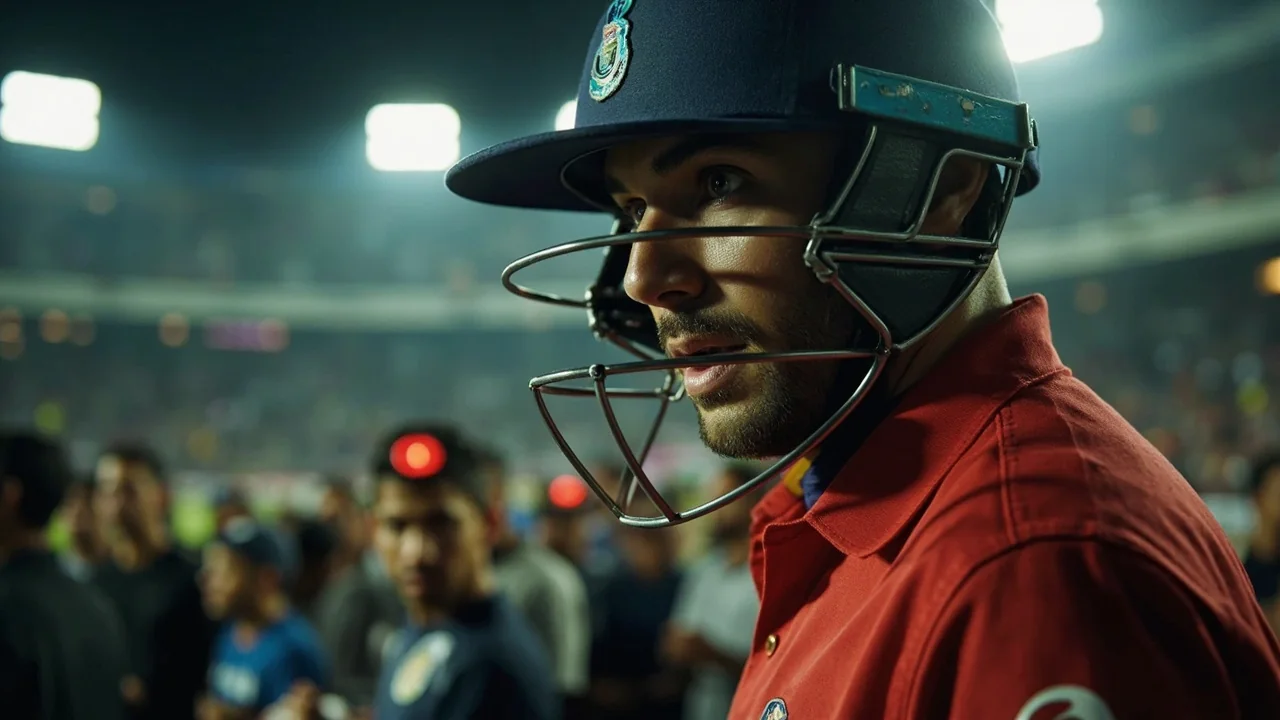
The pre-season calendar and the offer window
IPL 2026 has a tighter pre-season window than the previous cycle, with the auction pushed earlier and the season expected to open in late March rather than the late-March opening the 2025 season ran from. That shift compresses the window during which platforms run trial credits, sign-up bonuses and venue-deal cross-promotions, and it changes what those offers are actually worth.
The pre-season window has three natural phases. The first fortnight is the auction week plus the team regrouping phase: fixture lists are still provisional, captain picks are based on form read across the previous season, and platform offers tend to be the most generous because contest volume is at its lowest. The second fortnight is the warm-up phase: team management schedules intra-squad fixtures, Impact Player candidates emerge, and offers begin to harden around specific contest products. The third fortnight — the season-open fortnight — is when most platforms pull pre-season offers and replace them with match-day promotions tied to specific fixtures.
For a daily-play user at the ₹1 contest tier, the practical implication is straightforward. The earlier you commit, the wider the offer universe. The later you commit, the more specific the offers become, and the more closely they tie to fixtures you can actually plan around. A trial credit that expires inside the second fortnight works for a user who has locked in their captain-pick read. A trial credit that expires inside the auction week rewards a user who is comfortable picking from incomplete squad lists.
The editorial desk tracks these windows because they sit directly on top of the captain-pick cadence. A captain-pick cycle is roughly four-to-six matches long in the opening fortnight, and shortens as the season matures. Reading the offer window through the captain-pick lens means a one-week trial credit is worth more to a user with a settled captain read than to a user still feeling out the form ledger.
Trial credits against fixture density
The most common trial-credit mistake is treating the credit as a free contest. A ₹50 trial credit with a 7-day expiry sounds generous; against an IPL pre-season fixture density of roughly four matches per day across the first fortnight, the credit only funds five ₹10 contests. Five contests is not enough to test a captain-pick cycle. Five contests is enough to confirm a single captain read on a single match-up.

The desk's rule of thumb is that a trial credit earns its headline only when the credit funds at least one full captain-pick cycle inside its expiry window. For a daily-play user at ₹1 contest entry, that means the credit needs to fund somewhere between 10 and 30 contests. The exact number depends on whether the user is testing captain choices, role balance, or full-XI composition.
Three practical patterns show up repeatedly in the desk inbox. The first is the match-day cluster pattern: a trial credit that expires on a single match-day, sized to cover a full day of contests at ₹1 to ₹10 entry. This pattern rewards users who already know which fixtures they want to play. The second is the warm-up week pattern: a trial credit spanning the auction and warm-up fixtures, sized to cover a wider but lower-density set of contests. This pattern rewards users who want to test captain-pick reads before the season opens. The third is the season-pass pattern: a trial credit tied to the full season window, typically larger in headline number but spread across so many contests that the per-contest value is thin.
The match-day cluster is the cleanest fit for a daily-play user who has read the fixture list and locked in captain cycles. The warm-up week pattern suits a user who treats the pre-season as its own small contest season. The season-pass pattern suits a casual user who plays fewer contests and is comfortable with thinner per-contest value.
Two further details matter. Trial credits usually exclude cash withdrawal until KYC clears, so the credit is genuinely zero-cost only for users who already have KYC done. Trial credits often exclude high-entry contests, so the credit funds only the lower tiers — which is fine for daily-play users but limits any user planning to step up to mid-entry contests.
Sign-up bonuses and the captain-pick cadence
Sign-up bonuses look larger than trial credits because they tie to a deposit match or a referral credit. A "₹500 sign-up bonus on a ₹2,000 deposit" headline is common across the pre-season offer set. Against the captain-pick cadence, the bonus only earns its headline when the deposit funds a full pre-season cycle plus the opening fortnight — roughly 25 to 40 contests at mid-entry tiers.
The captain-pick cadence has its own math. The opening fortnight typically rewards recent-form picks over reputation picks; differential captains are useful in mid-table matches. The middle fortnight rewards settled picks as form clusters harden. The closing fortnight rewards top-order batters from teams still in playoff contention. A sign-up bonus that expires inside the opening fortnight is worth most to a user whose captain logic is calibrated for recent form. A bonus that spans the whole season is worth most to a user whose captain logic is calibrated for playoff-race weighting.
| Bonus shape | Typical expiry | Captain-cycle fit |
|---|---|---|
| Match-day cluster bonus | Single match-day | Captain-pick test on one fixture profile |
| Pre-season fortnight bonus | 14 days from credit | Full pre-season captain cycle |
| Season-long bonus | End of IPL 2026 season | Phase 1 + 2 + 3 captain calibration |
| Tiered deposit-match bonus | 30 days from each credit | Staggered captain reads at each tier |
The tiered deposit-match shape is the one most often mis-sold. The bonus credits in stages — a small portion on first deposit, a larger portion after a contest threshold, a final portion after KYC clears or a withdrawal is processed. Each stage has its own expiry. A user who plans only for the first stage loses the larger portion by accident. A user who reads the tier structure and times deposits to the captain-pick phases captures all three stages cleanly.
The honest read is that a sign-up bonus earns its headline only when the deposit amount itself would have been made for the contest volume it funds. If a user would have deposited ₹2,000 and played 30 contests without the bonus, the bonus is genuine value. If a user deposits ₹2,000 only because of the bonus and then plays fewer contests than they would have with a smaller deposit, the bonus is paying for behaviour the user would not otherwise have had.
Venue deals: when the ground beats the couch

Venue deals are the cleanest of the three pre-season shapes, because the value math is straightforward: ticket face value plus mandatory add-ons minus what the user would have spent anyway. The complication is that the IPL 2026 venue slate is more compressed than usual, with marquee fixtures distributed across fewer cities than in previous seasons.
For a fantasy user, the venue decision is rarely about the match itself — most fantasy users already have strong opinions about the teams without needing to attend. The decision is about the captain-pick information that comes from being in the ground: pitch behaviour in the first innings, dew window reading, Impact Player choice visible at the toss, and a clearer view of batter intent in the powerplay.
Three venue-deal patterns matter. The single-match hospitality bundle is best for a user attending one marquee fixture who wants the full ground experience. The multi-match season pass suits a user who will attend four or more fixtures and wants consistent seat category. The venue-plus-travel bundle suits a user travelling from outside the host city and needing transport plus accommodation alongside the ticket.
The per-match calculation works for all three. A season pass that totals ₹12,000 across eight fixtures is ₹1,500 per match. If the single-match hospitality ticket is ₹1,800, the pass saves ₹2,400 across the season — but only if the user actually attends all eight fixtures. If the user attends three, the pass costs ₹4,000 more than buying three single tickets and is no longer a deal.
The IPL 2026 venue slate has a quirk the desk is watching. Two of the planned host cities are still confirming stadium availability, which means a small number of fixtures could move cities late in the pre-season window. A season pass that locks a single stadium is more exposed to that shift than a multi-venue pass. The desk recommends reading the reschedule clause before committing to a single-venue bundle.
Offer documents in practice: what to read before you commit
The offer document is the most consistently under-read file in the pre-season process. The desk treats it as the primary source — not the marketing page, not the SMS push, not the in-app banner. The document is where the eligibility list, the expiry rules, the redemption path, the contest exclusions, the cancellation terms and the KYC dependencies live.
Five sections of the offer document do most of the work. The eligibility section lists who can use the offer. The expiry section states the type of expiry — hard, conditional or tiered — and the exact dates. The redemption section explains whether the credit is auto-applied or requires a manual claim. The cancellation section covers rain-outs, abandoned matches, KYC stalls and account closure. The exclusions section names contest tiers, match types and event categories that the credit cannot fund.
The honest read is that the offer document often disagrees with the marketing page. A marketing page that says "₹500 sign-up bonus" may sit on top of an offer document that says the bonus is split across three credit events, each with its own expiry. A marketing page that says "any IPL match" may sit on top of an offer document that excludes playoff fixtures. The marketing page is what gets shared; the offer document is what governs.
Two habits help. First, copy the offer document URL the moment the credit lands — most platforms host the document at a stable URL but occasionally replace the live version without notice. Second, screenshot the credit balance and the offer page on the same day. If the platform later disputes the credit, the dated screenshot is the simplest evidence to share with customer care.
The desk does not collect or quote offers. What the desk does is read every offer document that crosses the desk inbox, and that habit has surfaced a recurring pattern: the platforms that publish clean, scannable offer documents tend to be the same platforms that handle cancellation requests cleanly. The platforms that bury the offer document behind three menu layers tend to handle cancellations the same way.
State restrictions and the practical exit
Paid fantasy contests are restricted in Assam, Odisha, Telangana, Andhra Pradesh, Tamil Nadu and Sikkim. Stadium ticketing for IPL matches is also restricted in some of the same states under state-level gaming and ticketing rules. A pre-season offer that fails to mention the state restriction is not a defect — many offer documents state the restriction as a footnote rather than in the headline — but a user sitting in one of those states needs to verify state eligibility before committing.
The practical exit covers four scenarios. The first is match cancellation: most fantasy contests void when a match is abandoned without a result, refunding the entry fee to the wallet, often as contest credits rather than cash. The second is rain delay or DLS result: a DLS-adjusted result still counts as a played match for most platforms, and no refund applies. The third is KYC stall: the sign-up credit typically does not expire, but cannot be redeemed for cash until KYC clears, and the expiry clock usually pauses. The fourth is account closure: closing the account usually forfeits any unredeemed credit, so the standard practice is to redeem, withdraw any positive wallet balance, and only then close.
The cleanest way to think about exit conditions is to assume the worst plausible week. If a fixture is washed out, KYC is delayed and the user changes their mind about the season, does the offer still leave the user in credit or in deficit? If the answer is unclear, ask customer care before committing.
One detail the desk tracks: refund timing varies widely. Some platforms credit refunds within an hour; others take up to seven working days. For users planning multiple pre-season offers in parallel, the refund timing affects whether a refund from one offer can fund another offer's first deposit. The conservative approach is to treat refunds as taking the full platform-stated window.
The desk's pre-season checklist for the IPL 2026 captain-pick math
The seven-step read above folds into a single checklist the desk applies before any pre-season offer is committed to. Each line ties to the captain-pick cadence the desk has been tracking since the IPL 2025 final.
| Step | Desk check | Source |
|---|---|---|
| 1 | Where does the offer window sit on the IPL 2026 pre-season calendar? Auction week, warm-up or season open? | Fixture list, BCCI schedule |
| 2 | Does the trial credit fund a full captain-pick cycle inside its expiry? | Offer document, contest volume estimate |
| 3 | Does the sign-up bonus structure match the user's planned contest cadence? | Offer document, captain-pick cadence notes |
| 4 | Does the venue pass's per-match cost beat the single-match ticket for the user's planned attendance? | Per-match calculation, stadium booking page |
| 5 | Is the offer document readable, dated, and consistent with the marketing page? | Offer document, marketing page, screenshot record |
| 6 | Is the user in a state where the offer is valid, and what does the exit clause say on cancellation, KYC stall and account closure? | State eligibility list, offer document exit section |
| 7 | Has the user timed the refund window so a refund from one offer can fund the next? | Platform refund timing, deposit timing plan |
None of the seven checks is exotic. Each takes a few minutes. Together they convert a pre-season marketing headline into a captain-pick-aware decision the user can defend across the IPL 2026 season, which is the only kind of pre-season decision worth committing real money to when the calendar is as compressed as the 2026 cycle.
The wider IPL 2026 thread on the desk — fixture density, captain cycles, salary-cap math, points reference — sits one click away on the IPL 2026 season desk. The pre-season framework above is the same discipline the editorial desk applies to every partner offer that arrives at the desk inbox during the IPL 2026 pre-season window.
Open the IPL 2026 season desk
Apply the pre-season read to your next contest or match-day decision. Open the PlayerzPot app, check the IPL 2026 fixture list, and lock in a captain-pick read before the pre-season window closes.